Posts

Showing posts with the label toxins

Protecting Your Children from Common Environmental Toxins

Image
While environmental toxins are a concern for all of us, babies, toddlers and children are especially vulnerable to the damaging effects. As parents, we don’t always know when things in our everyday environment may expose our kids to potential harm. Photo Credit: Prospectpark.org The Coop’s Environmental Committee has compiled the information below to help you protect your family’s health. Protecting kids from sunburn is really important but choose sunscreens without oxybenzone or retinyl palmitate. The first gets into the bloodstream and acts like estrogen in the body; the latter promotes skin tumors. Sunscreens with zinc oxide and/or titanium dioxide are considered safe. >> Sun Screen Guide The American Academy of Pediatrics warns that children are uniquely susceptibility to pesticides’ toxicity . If you cannot buy all-organic produce, consult the EWG’s “ dirty dozen ” and “ c lean 15 ” lists , which are revised every year, to make smart choices about which kinds of produce are ...

Plastic People

Image
Photo credit: Jenna Spevack With the recent roll bag vote and the expanded TerraCycle collections happening at the Coop, plastic has had increased visibility among Coop members.  However, there’s one area where plastic chemicals are ubiquitously present yet mostly unseen within the walls of 782 Union. Where? Actually inside our food and then ultimately in our bodies.  To understand how plastic chemicals end up food and then in people, a basic lesson in polymer chemistry is needed.  Simplified, plastics are made up of long chains of plasticizer chemicals (a monomer is a plastic compound, which when strung together make up polymers that form the building blocks of plastic.)  Plastics of course have a wide variety of uses.  From hard, colored plastic to flexible, transparent cling film and other types of food packaging, plastics have brought a certain ease to many us living a modern life. Unfortunately popular plastic chemicals share two characteristics that’s a pr...

30 Days to Send Your Comments

The following is about protecting our air and water from hydrofracking—please read what Sandra Steingraber has to say and help out by sending your comments to the DEC now: A note from acclaimed ecologist and author  Sandra Steingraber: I’m writing to recruit you into a writing project I’m doing with Grassroots Environmental Education–and also ask if you will be an ambassador for it.  It’s called  Thirty Days of Fracking Regs , and it’s a fun-yet-deadly-serious approach to commenting on the newly released, and completely absurd, draft regulations for fracking in New York State . The story so far :  On Nov. 29, the New York Department of Environmental Conservation  issued draft regulations to allow fracking in New York. It was a cynical and reckless move—especially because the state’s own limited health review is not even finished, and Governor Cuomo has made no decision yet on whether to permit or prohibit fracking in our state.  The effect o...

Our Organic Food Threatened by Fracking

Image
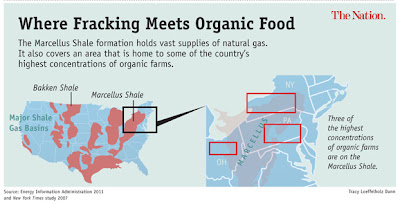
Park Slope Food Coop member Elizabeth Royte has written a new article, " Fracking Our Food Supply " for the Nation. She discusses, among other things, the effects of hydrofrack oil drilling on nearby farms and how that alters the safety of our food supply. Elizabeth interviewed farmers and learned of the increasing and sometimes bizarre illnesses and deaths of farm animals since fracking began in the area. This article is a must read for all of us, especially our lawmakers who are allowing this to happen. There is just no replacement for the clean air and water in New York State

Formaldehyde and You

Image
Nicholas Kristof's column in the 10/7/12 New York Times talked about The Cancer Lobby . He asks us to: Just consider formaldehyde, which is found in everything from nail polish to kitchen countertops, fabric softeners to carpets. Largely because of its use in building materials, we breathe formaldehyde fumes when we’re inside our homes. Just one other fact you should know: According to government scientists, it causes cancer. and then goes on to say: The [chemical] industry’s strategy is to lobby Congress to cut off money for the Report on Carcinogens, a 500-page consensus document published every two years by the National Institutes of Health, containing the best information about what agents cause cancer. If that sounds like shooting the messenger, well, it is. The article is well worth reading in it's entirety, but at this point we'll pause to look at which products do contain formaldehyde.,br. The Environmental Working Group provides a list of household cleaning p...

E-Waste Recycling on Saturday, 9/20

Image
Date : Saturday, September 20 Time : 10am-4pm, rain or shine Location : Brooklyn Ave. between St. Marks Ave. & Prospect Place in Bedford Stuyvesant—See map Directions : Take the C train to Kingston-Throops Ave., walk 6 blocks south and 1 avenue east or take the B43 bus to Brooklyn Ave.and St. Marks Ave. According to the EPA, electronic waste contributes 70% of the toxins (such as lead, mercury, cadmium, phosphros and flame-retardants) found in lnadfills.  Recycling your ele ctronics waste decreases energy and water use, reduces pollution and keeps haqardous chemicals out of our air and water. Acceptable items include: Computers (laptops & desktops, servers, mainframes) Monitors Printers, scanners, fax-machines, copiers Network devices (routers, hubs, modems, etc.) Peripherals (keyboards, mice, cables, cords, chargers, etc.) Tablets and E-readers Components (hard drives, CD-ROMs, circuit boards, power supplies, etc.) TVs, VCRs, DVRs, & DVD Players Digital Conv...

Sean Lennon's Op Ed About Gas Drilling

Image
From the 8/28/12 New York Times : Destroying Precious Land for Gas By SEAN LENNON ON the northern tip of Delaware County, N.Y., where the Catskill Mountains curl up into little kitten hills, and Ouleout Creek slithers north into the Susquehanna River, there is a farm my parents bought before I was born. My earliest memories there are of skipping stones with my father and drinking unpasteurized milk. There are bald eagles and majestic pines, honeybees and raspberries. My mother even planted a ring of white birch trees around the property for protection. A few months ago I was asked by a neighbor near our farm to attend a town meeting at the local high school. Some gas companies at the meeting were trying very hard to sell us on a plan to tear through our wilderness and make room for a new pipeline: infrastructure for hydraulic fracturing. Most of the residents at the meeting, many of them organic farmers, were openly defiant. The gas companies didn’t seem to care. They gave us the feel...

This Year's Dirty Dozen

Image
Every year the Environmental Working Group (EWG) releases a list of the 12 fruits and vegetables which routinely contain the most pesticides. If possible, choose to get organic versions of these. Washing your fruits and vegetables won't remove all traces of pesticide and pesticides tend to remain within our bodies over long periods of time. These chemicals have been linked with many health problems such as asthma, autism and learning disabilities, birth defects and reproductive dysfunction, diabetes, Parkinson’s and Alzheimer’s diseases, and several types of cancer. The Pesticides Induced Diseases Databases at Beyond Pesticides will tell you more. Here is the current list of fruits and vegetables to eat in organic form whenever possible: Apples Celery Sweet bell peppers Peaches Strawberries Imported nectarines Grapes Spinach Lettuce Cucumbers Domestic blueberries Potatoes EWG also lists a clean 15 --fruits and vegeetables that aren't so bad to eat non-organic.

Safer Pest Control

Image
Insects are, for the most part, an important part of our ecosystem. Many of us prefer that they stay in the outdoor ecosystem rather than in our homes. Small spiders and ladybugs can easily be scooped up on a piece of paper and returned to the outside world where they and you will be happier. Other kinds of insects, like bedbugs and roaches, have a less clear role in the outside ecosystem and when discovered indoors need to be removed ASAP. Beyond Pesticides has advice about the least toxic pesticide options. Ants, for example, plague many Brooklynites during the summer months. Beyond Pesticides has a factsheet to help you cope. There is helpful information about bedbugs as well. The Food Coop carries food grade diatomaceous earth , a safer alternative to tackle and prevent a number of indoor insects.

Plastic and People: The Plastic-Free Gardeners

Image
Where is the plastic-free gardener who can help us with gardening, as The Plastic-free Chef  does with cooking?  That person has not yet stepped forward.  Instead a bunch of people are tinkering, and sharing their experiences. Shreveport, 1950's:  my Aunt Grace lets me "help" harvest produce in her lovely and productive backyard garden.  We feast on beans, tomatoes, boysenberries, figs.  No petroleum products, no  plastic. NYC, 2012:  plastics have become deeply embedded in the gardening mindset and in supply sources.  Even organic gardeners often choose plastic pots, petroleum-based weed cloth and row covers, and buy organic fertilizers, composts, and manures in plastic bags. However, along with all the plastic window boxes and plastic mulch, hints and help with alternatives do exist.  For instance: Beth Terry of My Plastic-free Life  , entertaining and informative as usual, shares her plastic-free gardening adventure, parts 1 ...

Rachel Carson's Birthday

Image
“Those who contemplate the beauty of the earth find reserves of strength that will endure as long as life lasts. There is something infinitely healing in the repeated refrains of nature&#8212 the assurance that dawn comes after night, and spring after winter.” &#8212 Rachel Carson Rachel Carson was born May 27, 1907 and died on April 14, 1964&#8212 at age 57&#8212 of breast cancer. She wrote Silent Spring , credited with starting the current environmental movement. Ms. Carson was alarmed by the hundreds of new chemicals, particularly synthetic pesticides, that were being introduced into the environment each year. The effects of these chemicals on human health and the environment was not known, but even in the course of her lifetime, Ms. Carson observed the "silencing" of spring&#8212fewer birds, bees, butterflies and other life. She was villified by chemical manufacturers, not accustomed to being challenged, especially by a woman. She continued to ...

Toxic Sofas

Image
We've been hearing about the dangers of brominated flame retardants for awhile now, yet there was always the assumption that they served some purpose. Nicholas Kristoff's column in the 5/20/12 New York Times, " Are You Safe on that Sofa? " tells us the truth about these chemicals and how they became so widely used. In his words : It turns out that our furniture first became full of flame retardants because of the tobacco industry , according to internal cigarette company documents examined by The Tribune. A generation ago, tobacco companies were facing growing pressure to produce fire-safe cigarettes, because so many house fires started with smoldering cigarettes. So tobacco companies mounted a surreptitious campaign for flame retardant furniture, rather than safe cigarettes, as the best way to reduce house fires. The documents show that cigarette lobbyists secretly organized the National Association of State Fire Marshals and then guided its agenda so that it pushed...

Got Drugs? Dispose of Them Safely

Image
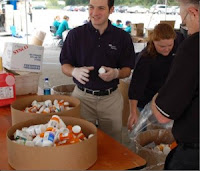
Saturday, April 28 is the fourth national Pharmaceutical Take-back Day. The DEA website allows you to type in your zip code and find a take-back location near you . There are locations in Brooklyn and other NYC boroughs—more will be added to the database until the day of the event. What can you bring to these locations? All medicines that your family and your pets use should be properly disposed of at a drug take-back program. For more details, check the DEA website .

Mrs. Meyer's Stinks

Image
Many environmentally-aware folks have been lured into believing that Mrs. Meyer's Clean Day is a healthy product. However, if you read the fine print (and the ingredients list) you will see the truth. If you use your nose, you will smell the truth. Mrs. Meyer's uses synthetic ingredients and fragrances . When you see the term " fragrance " or " parfum " in the ingredients list remember that the fragrance/perfume industry is protected by trade secret laws. This means they are not required to tell you what's in their formulations. The ingredients that are lumped into the listing fragrance or parfum could include up to 1000 different synthetic chemicals! Our current toxic chemicals law (the Toxic Substances Control Act ) is so outdated and weak that testing has been required on fewer than 2% of the 80,000 chemicals available for use in the United States. Many of these chemicals, especially when they interact, are linked to numerous health problems, like en...

Saturday, Oct. 26 is Drug Take-back Day

Image
Medicines are now found in our surface and ground water, as well as drinking water supplies. Wastewater treatment facilities do not remove most medicines. Throwing medicines in the garbage—especially controlled substances like OxyContin and other pain relievers—is not safe because the drugs can be found and used by others. Medicines thrown in the trash can also get into the environment. Saturday, October 26, from 10am to 2pm is the third annual Prescription Drug Take-back Day. There are many drop-off locations in Brooklyn and the other boroughs of New York City. Check this site to find a drop off location near you. Check the list of accepted items if you have any questions.

Pharmaceutical Take-Back Day

Image
The US Drug Enforcement Agency (DEA) has organized the third nautional pharmaceutical take-back day on Saturday, October 29, between 10am and 2pm in locations across the United States. The DEA website allows you to type in your zip code and find the locations nearest to you . There are numerous locations in Brooklyn and other NYC boroughs—more will be added to the database until the day of the event. The amount of pharmaceuticals currently in use has become an environmental problem, because, like everything else, sooner or later the drugs turn into waste products. Trace elements of a wide variety of drugs including antibiotics, anti-depressants and sex hormones have been found in lakes and rivers as well as numerous municipal water supplies. In an effort to mitigate this problem, pharmaceutical take-back events have been organized to properly collect and dispose of left-over medications so they do not migrate into the environment. This is not a reason to switch to bottled water, m...

Plastic Releases Estrogenic Chemicals

Image
Most people have heard of BPA-free plastic, but a recent study has found that nearly all plastic , even that which claims to be BPA-free, releases chemicals that have estrogenic activity (EA) and cause hormone distruption. Their results found that: "Almost all commercially available plastic products we sampled—independent of the type of resin, product, or retail source—leached chemicals having reliably detectable EA, including those advertised as BPA free. In some cases, BPA-free products released chemicals having more EA than did BPA-containing products." They noted that: "Chemicals having estrogenic activity (EA) reportedly cause many adverse health effects, especially at low (picomolar to nanomolar) doses in fetal and juvenile mammals." Their conclusion indicates that the industry does have access to additives that have no detectable EA and have similar costs. If these were used by the plastics industry, we could: "eliminate a potential health risk po...